

Introduction
Time is one of the most valuable resources every person has, yet it is also one of the easiest to waste. Whether you are a student preparing for exams, an employee managing multiple projects, or an entrepreneur building a business, learning effective time management skills can transform the way you work and live. Instead of feeling overwhelmed by endless tasks and tight deadlines, you can take control of your schedule and accomplish more with less stress.
Many people believe that successful individuals simply have more time, but the truth is that everyone has the same 24 hours in a day. The difference lies in how those hours are planned and used. Strong time management helps you prioritize important tasks, reduce distractions, and create a healthy balance between work and personal life.
Developing good habits does not happen overnight. It requires consistency, discipline, and a willingness to improve. Fortunately, anyone can learn these skills with the right strategies and mindset. From setting realistic goals to organizing daily routines, small improvements can produce significant long-term results.
In this comprehensive guide, you will learn what time management skills are, why they matter, practical methods to improve them, common mistakes to avoid, and expert tips that will help you stay productive every day.
What Are Time Management Skills?
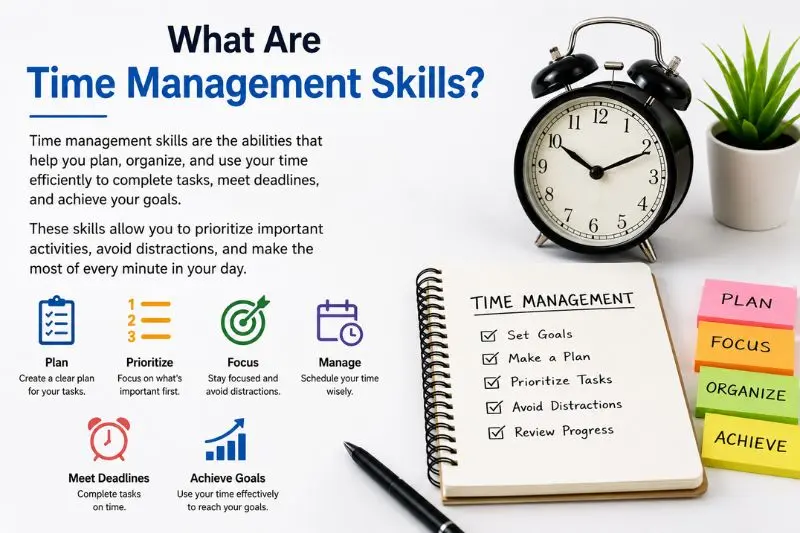
Time management skills are the abilities that help people plan, organize, and use their time efficiently to complete tasks and achieve goals. These skills involve deciding what needs immediate attention, allocating enough time for each activity, and avoiding unnecessary distractions.
Good time management is not about working every minute of the day. Instead, it focuses on working smarter rather than harder. By organizing tasks effectively, individuals can complete more work while maintaining a healthier work-life balance.
Some essential time management skills include:
- Planning daily and weekly schedules
- Setting realistic goals
- Prioritizing important tasks
- Avoiding procrastination
- Staying focused
- Meeting deadlines
- Delegating responsibilities when necessary
- Reviewing progress regularly
For example, a university student who creates a weekly study timetable and follows it consistently is practicing effective time management. Similarly, a project manager who divides a large project into smaller milestones is using time management strategies to ensure timely completion.
These skills become more valuable as responsibilities increase. Whether in education, business, or personal life, effective planning allows people to maximize productivity without feeling constantly rushed.
Why Are Time Management Skills Important?
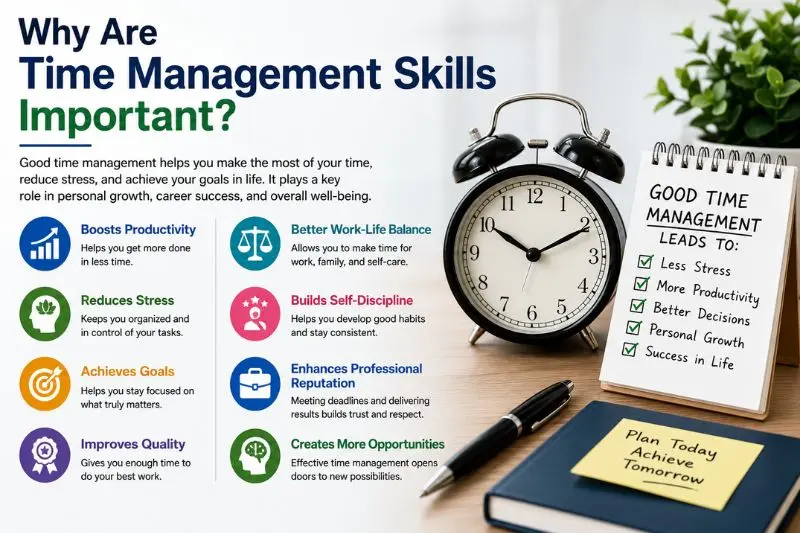
Learning strong time management skills provides benefits that extend far beyond simply finishing work on time. They improve performance, reduce stress, and create opportunities for both personal and professional growth.
Here are several reasons why time management is essential.
Increases Productivity
When tasks are organized according to priority, less time is wasted deciding what to do next. This leads to higher efficiency and better results.
Reduces Stress
Missed deadlines and unfinished work often create unnecessary pressure. A structured schedule helps people stay in control and reduces anxiety.
Improves Decision-Making
Planning ahead allows individuals to think clearly instead of making rushed decisions under pressure.
Builds Self-Discipline
Following a daily schedule strengthens discipline, making it easier to develop productive habits over time.
Creates Better Work-Life Balance
Effective planning ensures that work does not consume all available time, leaving room for family, hobbies, exercise, and relaxation.
Enhances Professional Reputation
Employees who consistently meet deadlines and deliver quality work are often viewed as dependable and trustworthy.
Supports Long-Term Goals
Small daily achievements eventually contribute to major accomplishments such as earning a degree, growing a business, or achieving financial stability.
Step-by-Step Guide to Improving Time Management Skills
Step 1: Set Clear Goals
The first step toward better time management is knowing exactly what you want to accomplish.
Use SMART goals that are:
- Specific
- Measurable
- Achievable
- Relevant
- Time-bound
Instead of saying, “I want to study more,” create a goal like, “I will study mathematics for one hour every weekday evening.”
Clear goals provide direction and help eliminate unnecessary activities.
Step 2: Prioritize Your Tasks
Not every task carries the same level of importance.
One effective method is to divide your tasks into four categories:
- Urgent and important
- Important but not urgent
- Urgent but less important
- Neither urgent nor important
Complete high-priority work first before moving to less critical activities.
For example:
Completing a project due tomorrow should take priority over organizing old files
Step 3: Create a Daily Schedule
A daily plan helps prevent confusion and keeps you focused throughout the day.
Include:
- Important meetings
- Study sessions
- Exercise
- Meal breaks
- Family time
- Personal development
Leave some extra time between activities to handle unexpected situations.
Planning the night before often makes mornings more productive.
Step 4: Break Large Tasks into Smaller Steps
Large projects can feel overwhelming.
Instead of trying to complete everything at once, divide work into manageable sections.
Example:
Writing a research paper becomes easier when divided into:
- Topic selection
- Research
- Outline
- First draft
- Editing
- Final review
Small victories build momentum and reduce procrastination.
Step 5: Eliminate Distractions
Distractions are one of the biggest obstacles to productivity.
Common distractions include:
- Social media
- Unnecessary phone notifications
- Television
- Frequent email checking
- Noisy environments
Reduce interruptions by:
- Turning off notifications
- Using focus mode
- Keeping your workspace organized
- Setting dedicated work periods
Even removing small distractions can significantly improve concentration.
Step 6: Learn to Say No
Many people struggle because they accept too many responsibilities.
Politely declining tasks that do not align with your priorities protects your schedule and prevents burnout.
Remember that saying no to low-priority commitments often means saying yes to your important goals.
Step 7: Use Time Blocking
Time blocking involves assigning specific periods for specific activities.
Example schedule:
- 8:00–9:00 AM: Email
- 9:00–11:00 AM: Deep work
- 11:00–11:30 AM: Break
- 11:30–1:00 PM: Meetings
- 2:00–4:00 PM: Project work
This technique reduces multitasking and improves focus.
Step 8: Avoid Multitasking
Many people think multitasking improves productivity.
However, constantly switching between tasks often leads to mistakes and reduced efficiency.
Focus on completing one task before moving to another whenever possible.
Quality usually improves when attention remains on a single activity.
Step 9: Review Your Progress
At the end of each day or week, evaluate your performance.
Ask yourself:
- Which tasks were completed?
- What caused delays?
- Which habits worked well?
- What can be improved?
Regular reviews help identify patterns and improve future planning.
Step 10: Build Consistent Habits
Time management is not a one-time activity.
Consistency transforms productive actions into automatic habits.
Examples include:
- Waking up at the same time daily
- Planning each evening
- Reviewing weekly goals
- Keeping an organized workspace
- Completing high-priority work first
Small daily improvements eventually create lasting success.
Benefits of Time Management Skills
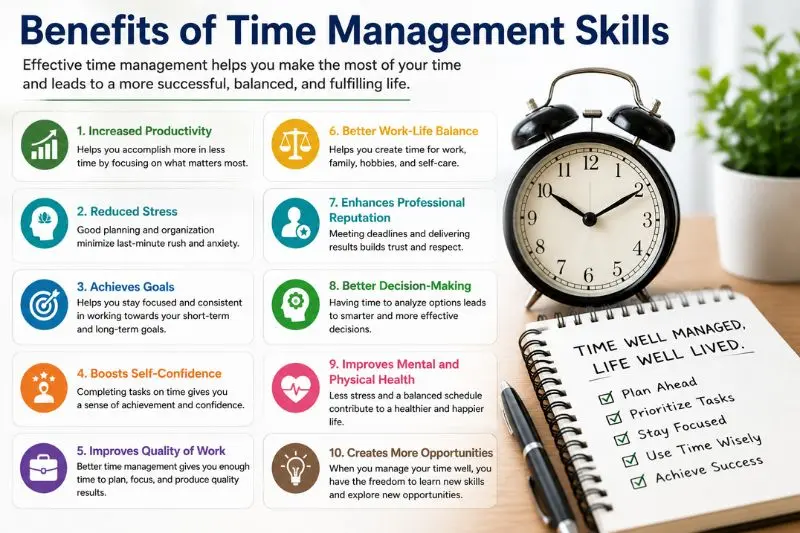
Effective time management offers numerous advantages in both personal and professional life.
Some of the most important benefits include:
- Higher productivity and efficiency
- Better focus on important tasks
- Reduced stress and anxiety
- Improved work quality
- Greater self-confidence
- Stronger decision-making abilities
- Better organization
- Improved academic performance
- Increased career opportunities
- Healthier work-life balance
- More free time for hobbies and family
- Better financial management through organized planning
- Increased motivation
- Higher job satisfaction
- More consistent achievement of long-term goals
These benefits grow over time as good habits become part of everyday life.lease send “2” for Part 2, which includes:
Disadvantages and Risks
Some common disadvantages include:
- Increased stress due to unfinished tasks and approaching deadlines.
- Lower productivity because time is wasted on unimportant activities.
- Poor work quality caused by rushing to complete assignments.
- Difficulty balancing work, education, and personal life.
- Missed opportunities for learning, career growth, or business development.
- Reduced motivation when tasks continue to pile up.
- Frequent procrastination that delays important responsibilities.
- Poor physical and mental health due to long working hours and lack of rest.
- Damaged professional reputation from repeatedly missing deadlines.
- Less free time for family, hobbies, and relaxation.
Recognizing these risks is the first step toward building better habits and making positive changes.
Common Mistakes to Avoid
Even people who understand the importance of time management skills can make mistakes that reduce their effectiveness. Avoiding these habits can significantly improve your daily productivity.
Not Setting Priorities
Treating every task as equally important creates confusion. Focus on high-impact activities before less important ones.
Procrastinating
Delaying tasks often increases pressure and reduces the quality of your work. Start with small actions if a task feels overwhelming.
Overloading Your Schedule
Trying to accomplish too much in one day often leads to frustration. Leave enough time for unexpected events and short breaks.
Ignoring Breaks
Working continuously without rest decreases concentration and energy. Short breaks improve focus and help maintain consistent performance.
Multitasking Too Often
Handling multiple tasks simultaneously may seem productive, but it usually reduces accuracy and increases mistakes.
Failing to Plan Ahead
Beginning the day without a clear plan wastes valuable time deciding what to do next. Prepare your schedule in advance.
Allowing Constant Distractions
Frequent interruptions from phones, social media, or unnecessary conversations can consume hours without noticeable progress.
Not Reviewing Progress
Without evaluating your daily or weekly performance, it becomes difficult to identify areas that need improvement.
What are the most important time management skills?
The most valuable skills include planning, prioritizing tasks, setting goals, organizing schedules, avoiding procrastination, maintaining focus, and reviewing progress regularly. Together, these habits help individuals complete work more efficiently and consistently.
Can anyone improve their time management skills?
Yes. Time management is a learned skill rather than a natural talent. With consistent practice, anyone can develop better habits, improve organization, and become more productive regardless of age or profession.
How does time management reduce stress?
Proper planning prevents last-minute rushing and helps people complete important tasks before deadlines. Knowing exactly what needs to be done creates confidence and reduces unnecessary anxiety.
What tools can help with time management?
Many people use planners, calendars, notebooks, digital reminders, task management applications, and scheduling software. The best tool is the one you use consistently and comfortably.
Why is procrastination harmful?
Procrastination delays progress, increases pressure, and often results in rushed work with lower quality. It can also reduce motivation and create a cycle of unfinished tasks.
How long does it take to build good time management habits?
The timeline varies for each individual. Some improvements become noticeable within a few weeks, while lasting habits often require several months of consistent effort and regular practice.
Is working longer the same as managing time well?
No. Working longer hours does not always produce better results. Effective time management skills focus on completing important tasks efficiently instead of simply spending more hours working.
How can students improve their time management?
Students should create study schedules, break assignments into smaller tasks, avoid distractions during study sessions, review lessons regularly, and start projects early instead of waiting until deadlines approach.
Expert Tips and Bonus Points
Mastering time management skills takes continuous improvement. These practical tips can help you become even more productive.
Start Your Day with the Most Important Task
Completing your highest-priority task early creates momentum and increases motivation for the rest of the day.
Use the 80/20 Rule
Often called the Pareto Principle, this idea suggests that a small percentage of your efforts produces the majority of your results. Focus on activities that create the greatest impact.
Keep a Time Journal
Track how you spend your time for one week. You may discover hidden distractions or activities that consume more time than expected.
Group Similar Tasks Together
Respond to emails, make phone calls, or complete administrative work in dedicated blocks instead of constantly switching between activities.
Set Personal Deadlines
Creating earlier deadlines provides extra time for unexpected challenges and reduces last-minute pressure.
Maintain an Organized Workspace
A clean and organized environment makes it easier to find materials, reduces distractions, and improves concentration.
Learn from Every Week
Spend a few minutes reviewing your achievements, challenges, and unfinished tasks. Continuous reflection leads to continuous improvement.
Protect Your Personal Time
Effective time management is not only about work. Schedule time for exercise, hobbies, family, and relaxation to maintain long-term productivity and overall well-being.
Conclusion
Developing strong time management skills is one of the smartest investments you can make in your personal and professional life. These skills help you use your time wisely, complete important tasks efficiently, and reduce unnecessary stress. Instead of feeling overwhelmed by endless responsibilities, you gain greater control over your daily routine and make steady progress toward your long-term goals.
The journey begins with simple habits such as setting clear goals, prioritizing tasks, planning your day, avoiding distractions, and reviewing your progress regularly. While improvement may not happen overnight, consistent practice gradually transforms these actions into lifelong habits that support success in every area of life.
Remember that effective time management is not about filling every minute with work. It is about making thoughtful decisions, focusing on what truly matters, and creating a balanced lifestyle that includes learning, productivity, health, and personal relationships.
Whether you are a student preparing for examinations, a professional managing multiple responsibilities, or an entrepreneur pursuing ambitious goals, mastering time management skills will help you work smarter, stay organized, and achieve more with confidence. By applying the strategies shared in this guide, you can build a productive routine that leads to lasting success, greater satisfaction, and a healthier, more balanced future.
