

Introduction
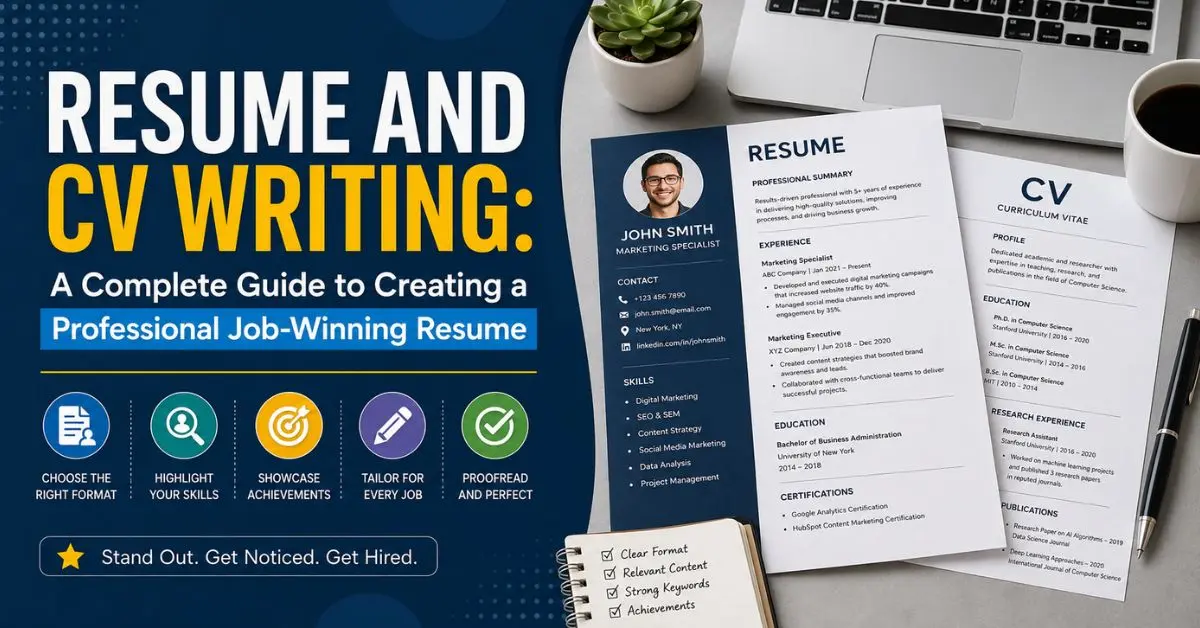
Resume and CV Writing is one of the most valuable career skills anyone can develop. Whether you are a student searching for your first internship, a fresh graduate entering the job market, or an experienced professional looking for better opportunities, a well-written resume or CV can significantly improve your chances of getting noticed by employers. Since recruiters often spend only a few seconds reviewing each application, presenting your qualifications clearly and professionally is essential.
Many people believe that creating a resume simply involves listing education and work experience. However, effective Resume and CV Writing is much more than that. It requires careful planning, organization, and customization to highlight your strengths while matching the requirements of a specific job. A strong document communicates your value, achievements, and professional potential in a concise and attractive format.
Today’s competitive job market demands resumes that are easy to read, visually appealing, and optimized for applicant tracking systems. Learning the right techniques can help you stand out from hundreds of applicants applying for the same position.
This comprehensive guide explains everything you need to know about Resume and CV Writing. You’ll discover the differences between resumes and CVs, learn step-by-step writing techniques, understand common mistakes, and explore expert tips that can help you create a document employers want to read.
What is Resume and CV Writing?
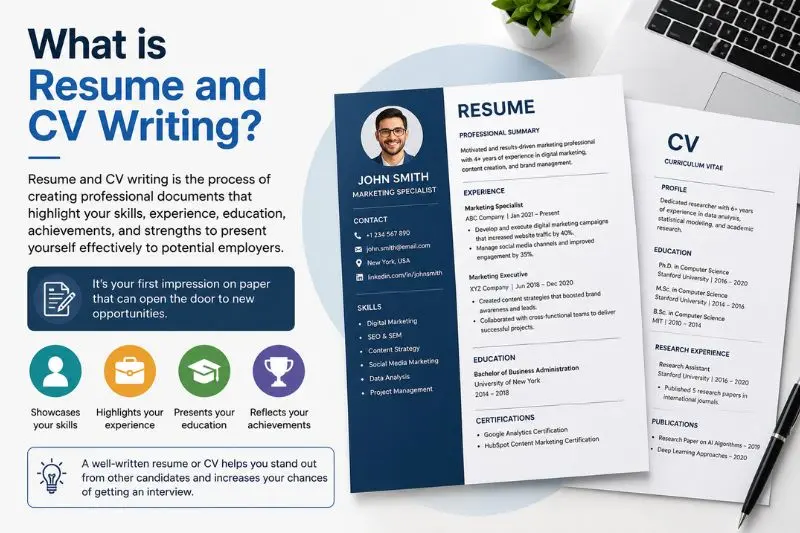
Resume and CV Writing is the process of creating professional documents that summarize your education, work experience, technical skills, achievements, certifications, and career goals for potential employers.
Although people often use the terms interchangeably, there is a difference between a resume and a curriculum vitae (CV).
A resume is a concise document, usually one or two pages long, that focuses on relevant skills and experience for a particular job.
A CV is generally more detailed and includes a complete overview of your educational background, research, publications, certifications, presentations, awards, and professional accomplishments. CVs are commonly used in academic, medical, and research careers.
Regardless of the format, the primary objective remains the same: presenting your qualifications in a way that convinces employers to invite you for an interview.
Why is Resume and CV Writing Important?
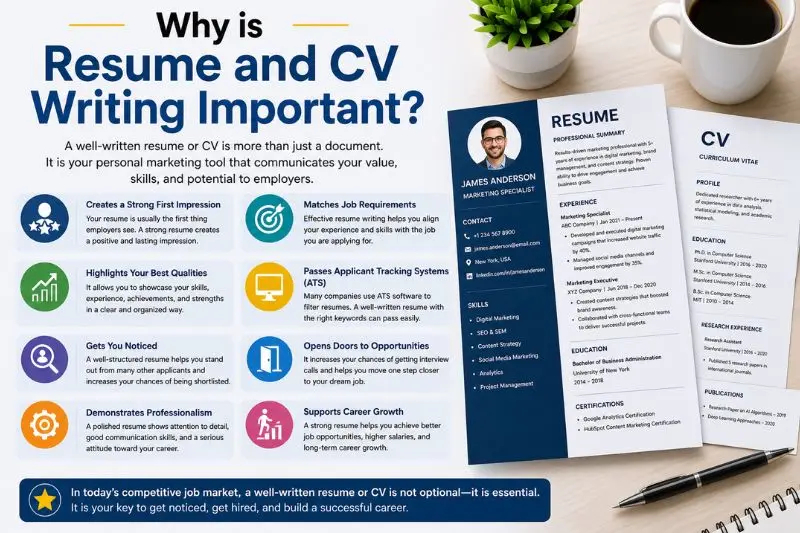
Professional Resume and CV Writing offers numerous advantages throughout your career journey.
A well-written resume:
- Creates an excellent first impression.
- Demonstrates professionalism.
- Highlights your strongest qualifications.
- Makes your achievements easier to understand.
- Increases interview opportunities.
- Shows attention to detail.
- Helps applicant tracking systems identify relevant keywords.
- Separates you from competing candidates.
Recruiters often receive hundreds of applications for one vacancy. An organized, customized resume makes it easier for hiring managers to recognize your value within seconds.
Step-by-Step Guide to Resume and CV Writing
Step 1: Understand the Job Description
Before writing anything, carefully read the job advertisement.
Identify:
- Required skills
- Experience level
- Educational qualifications
- Technical knowledge
- Preferred certifications
- Important keywords
Your resume should directly reflect these requirements whenever they match your qualifications.
Step 2: Choose the Right Format
The most common resume formats include:
Chronological Resume
Best for professionals with consistent work experience.
Functional Resume
Focuses on skills rather than employment history and suits career changers or people with employment gaps.
Combination Resume
Blends work experience and skills, making it suitable for many professionals.
Select the format that best highlights your strengths.
Step 3: Write a Strong Contact Section
Include accurate contact information.
Your header should contain:
- Full name
- Phone number
- Professional email address
- City and country
- Professional portfolio or profile if applicable
Avoid adding unnecessary personal information such as age, marital status, religion, or national identification numbers unless specifically requested.
Step 4: Create a Professional Summary
Your professional summary should briefly introduce yourself in three to five sentences.
Example:
“Results-driven marketing graduate with excellent communication skills and internship experience in digital marketing. Passionate about creating innovative campaigns and improving customer engagement through data-driven strategies.”
This section should quickly explain why you are an excellent candidate.
Step 5: Highlight Your Skills
Divide skills into categories.
Technical Skills
- Microsoft Office
- Data analysis
- Graphic design
- Programming
- Project management
Soft Skills
- Leadership
- Teamwork
- Communication
- Problem-solving
- Time management
- Adaptability
Include only skills relevant to the position.
Step 6: Present Work Experience
List positions in reverse chronological order.
Each entry should include:
- Job title
- Company name
- Employment dates
- Major achievements
Instead of writing responsibilities only, emphasize measurable accomplishments.
Example:
“Improved customer satisfaction by 20% through implementing a new support process.”
Numbers strengthen credibility.
Step 7: Include Education
Mention:
- Degree
- Institution
- Graduation year
- Academic achievements if relevant
Fresh graduates may also include coursework, projects, or academic honors.
Step 8: Add Certifications
Professional certifications demonstrate continuous learning.
Examples include:
- Digital marketing
- Cybersecurity
- Data analytics
- Project management
- Language proficiency
Include only recognized and relevant certifications.
Step 9: Showcase Achievements
Employers appreciate measurable accomplishments.
Examples include:
- Employee of the Month
- Sales awards
- Scholarship recipient
- Successful project completion
- Volunteer leadership
Achievements demonstrate your impact rather than simply describing duties.
Step 10: Customize Every Application
Never send the same resume to every employer.
Adjust:
- Keywords
- Professional summary
- Skills
- Experience
- Achievements
Customization significantly increases your chances of passing resume screening systems.
Step 11: Proofread Carefully
Grammar mistakes can immediately reduce credibility.
Before submitting:
- Check spelling.
- Review formatting.
- Verify dates.
- Confirm contact details.
- Remove unnecessary information.
Ask someone else to review your resume for additional feedback.
Benefits of Resume and CV Writing
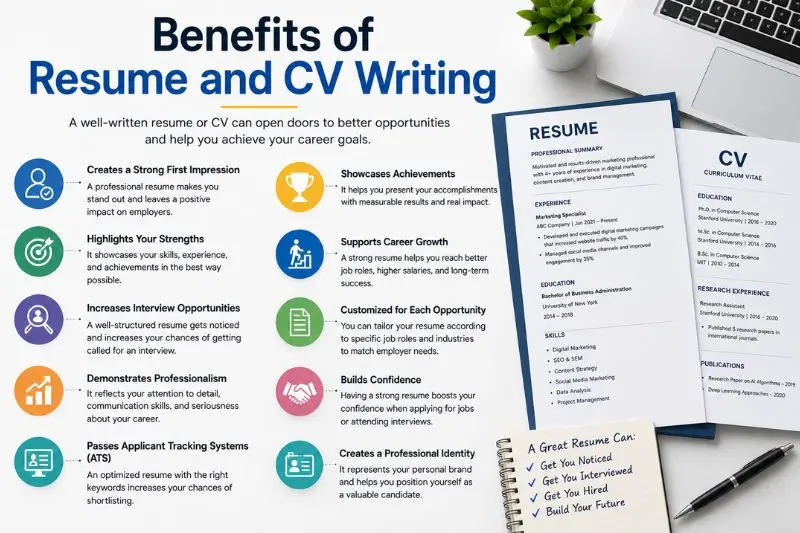
A professionally written resume offers many advantages:
- Improves first impressions.
- Increases interview invitations.
- Demonstrates professionalism.
- Highlights achievements effectively.
- Shows career progression.
- Helps employers quickly evaluate qualifications.
- Supports applicant tracking system optimization.
- Builds confidence during job applications.
- Saves recruiters valuable time.
- Improves personal branding.
- Makes career transitions easier.
- Enhances networking opportunities.
- Encourages continuous career development.
- Reflects strong communication skills.
- Creates long-term career value.
Disadvantages and Risks
Although Resume and CV Writing is essential, certain mistakes can reduce effectiveness.
Potential risks include:
- Using outdated formats.
- Including irrelevant information.
- Overloading the document with unnecessary details.
- Poor formatting that reduces readability.
- Grammar and spelling errors.
- Exaggerating qualifications.
- Copying generic templates without customization.
- Using excessive graphics for professional industries.
- Ignoring job-specific keywords.
- Providing inaccurate employment information.
Avoiding these problems greatly improves your professional image.
Common Mistakes to Avoid
Many applicants unknowingly weaken their resumes through avoidable mistakes.
Some of the most common include:
Using one generic resume
Every employer has unique expectations.
Writing long paragraphs
Recruiters prefer concise bullet points.
Ignoring achievements
Focus on measurable results rather than daily responsibilities.
Including irrelevant experience
Remove outdated or unrelated jobs unless they demonstrate transferable skills.
Poor formatting
Use consistent fonts, spacing, headings, and margins.
Using an unprofessional email
Choose an email address based on your real name.
Spelling mistakes
Proofread multiple times before submission.
Adding unnecessary personal information
Only include details requested by employers.
Lying on your resume
Employers frequently verify qualifications during hiring.
Making the resume too long
Most resumes should remain one or two pages depending on experience.
What is the difference between a resume and a CV?
A resume is shorter and tailored to a specific position, while a CV provides a comprehensive overview of academic, professional, and research achievements.
How long should a resume be?
For most professionals, one page is sufficient. Experienced candidates may require two pages to adequately
Should I customize my resume for every job?
Yes. Tailoring your resume to each job description greatly improves your chances of passing applicant tracking systems and attracting recruiters.
What skills should be included?
Include both technical and soft skills relevant to the role, such as communication, teamwork, software proficiency, leadership, and problem-solving.
Can students create strong resumes without work experience?
Absolutely. Students can highlight academic achievements, volunteer work, internships, projects, extracurricular activities, and transferable skills.
Should I include hobbies?
Only include hobbies if they demonstrate valuable skills or relate to the position. Otherwise, prioritize professional qualifications.
How often should I update my resume?
Update it whenever you complete a new project, earn a certification, gain additional experience, receive an award, or develop new skills.
Expert Tips and Bonus Points
Professional resume writers recommend following these best practices:
- Keep formatting clean and consistent.
- Use action verbs such as managed, developed, achieved, improved, designed, and implemented.
- Quantify achievements whenever possible.
- Use keywords from the job description naturally.
- Prioritize recent and relevant experience.
- Save your resume as a PDF unless instructed otherwise.
- Choose professional fonts such as Calibri, Arial, or Times New Roman.
- Leave sufficient white space for easy reading.
- Use bullet points instead of lengthy paragraphs.
- Maintain honesty throughout your document.
- Build a master resume containing every achievement, then customize shorter versions for individual applications.
- Include internships, freelance projects, volunteer work, and certifications if professional experience is limited.
- Review your resume every six months to keep it current.
- Focus on results instead of responsibilities.
- Remember that clarity is more valuable than creativity for most industries.
Conclusion
Resume and CV Writing is much more than creating a document to apply for jobs. It is a strategic process that allows you to present your qualifications, achievements, and professional potential in the most effective way possible. A carefully written resume communicates confidence, professionalism, and attention to detail while helping recruiters quickly understand why you are the right candidate for a position.
Whether you are entering the workforce for the first time or pursuing the next stage of your career, investing time in developing a strong resume is one of the smartest decisions you can make. By choosing the right format, highlighting measurable achievements, tailoring each application, and avoiding common mistakes, you significantly improve your chances of securing interviews and advancing your career.
Remember that your resume is a living document that should evolve alongside your professional growth. Regular updates, continuous learning, and thoughtful customization ensure it always reflects your latest accomplishments and abilities. With consistent effort and the practical techniques outlined in this guide, you can create a professional resume or CV that captures employers’ attention, showcases your strengths, and opens doors to exciting career opportunities.
