

Introduction
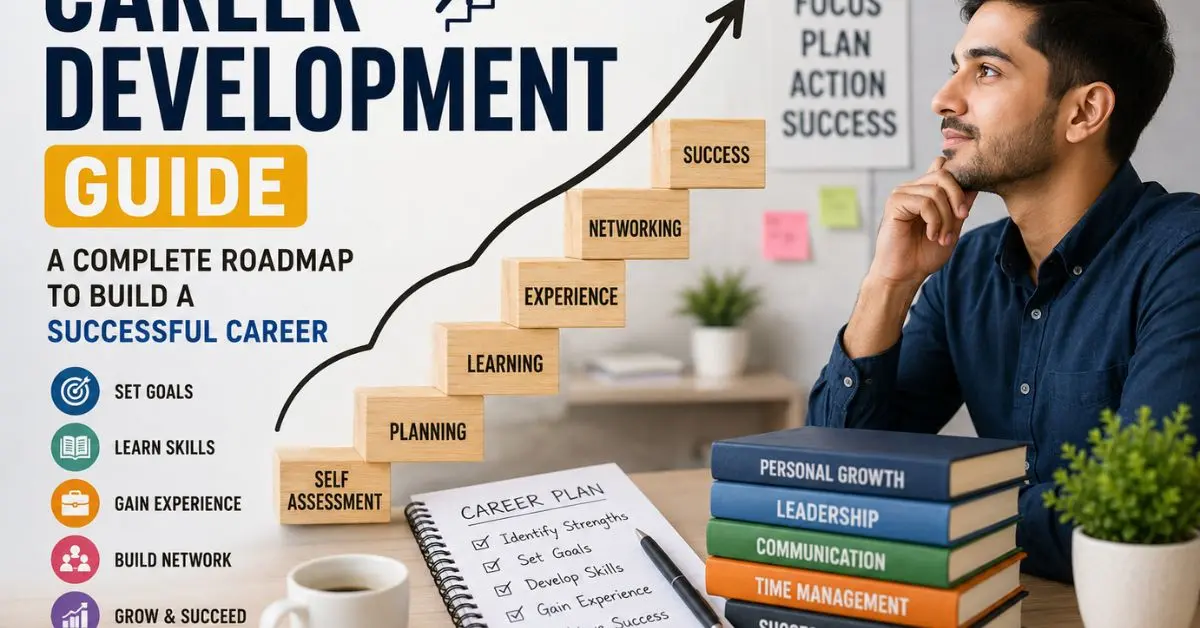
Building a successful career does not happen by chance. It requires planning, continuous learning, and a willingness to adapt to changing opportunities. Whether you are a student preparing for your first job, a recent graduate entering the workforce, or a professional looking to grow, understanding career development is one of the smartest investments you can make.
A well-planned Career Development Guide helps individuals identify their strengths, improve their skills, and make informed decisions about their professional future. Instead of moving from one job to another without direction, career development provides a structured path toward achieving personal and professional goals.
Today’s workplace changes rapidly due to technology, globalization, and evolving business needs. New careers emerge while traditional roles continue to transform. Because of this, professionals who continuously improve their knowledge and skills remain competitive and valuable in the job market.
Career development is not limited to earning promotions or higher salaries. It also includes building confidence, improving communication, strengthening leadership abilities, expanding professional networks, and finding work that matches your interests and values.
This comprehensive Career Development Guide explains everything beginners and intermediate professionals need to know. You’ll learn what career development means, why it matters, practical steps to create a career plan, common mistakes to avoid, and expert advice that can help you achieve long-term success.
What Is Career Development?
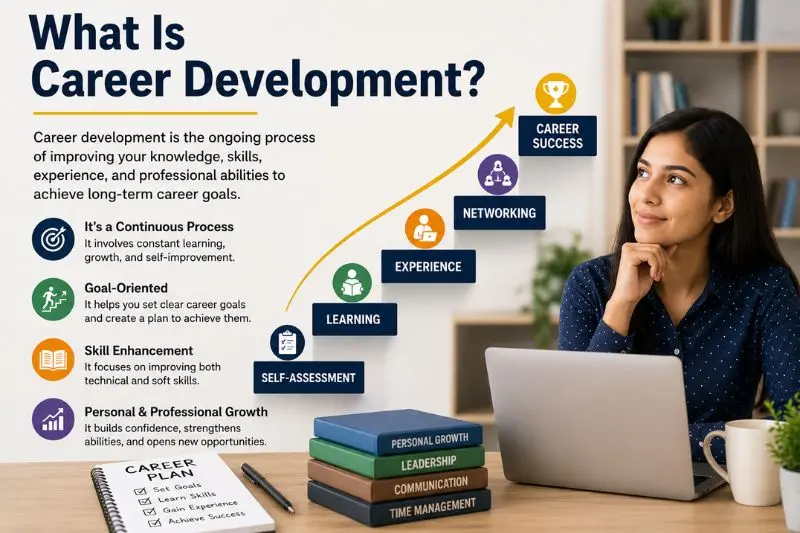
Career development is the ongoing process of improving your knowledge, skills, experience, and professional abilities to achieve long-term career goals. It involves making informed decisions about education, training, employment opportunities, and personal growth.
Unlike simply finding a job, career development focuses on creating a meaningful professional journey. It encourages individuals to evaluate where they are today and where they want to be in the future.
Career development includes several important activities:
- Identifying career goals
- Learning new technical and soft skills
- Gaining practical experience
- Building professional relationships
- Seeking mentorship
- Pursuing certifications
- Improving personal productivity
- Evaluating career progress regularly
For example, someone working as a customer service representative may decide to become a project manager. By learning leadership, communication, and project management skills, they gradually move toward their desired position.
Career development is a lifelong process rather than a one-time event.
Why Is Career Development Important?
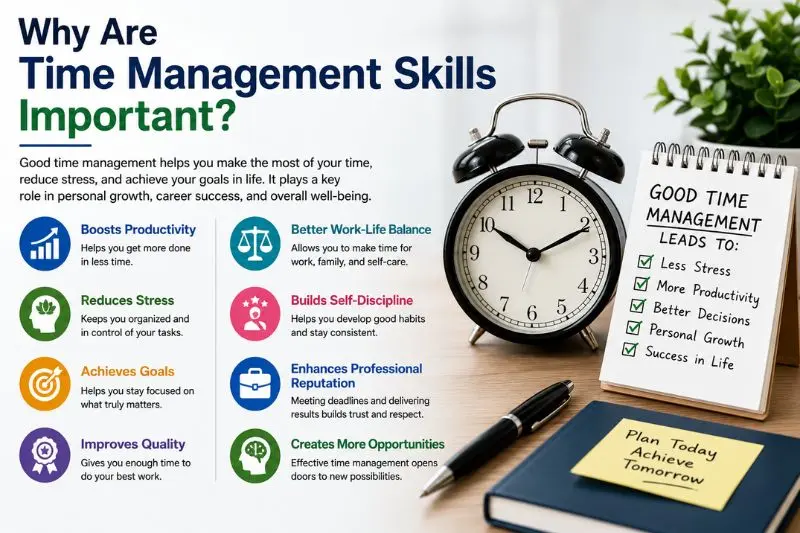
Career development plays a vital role in achieving both professional success and personal satisfaction. It allows individuals to stay prepared for new opportunities while adapting to changing industry demands.
Some key reasons include:
- Helps define clear career goals.
- Improves confidence through continuous learning.
- Increases employability in competitive markets.
- Supports higher earning potential.
- Creates opportunities for promotion.
- Encourages professional networking.
- Builds leadership and communication skills.
- Helps maintain long-term career satisfaction.
- Reduces uncertainty during career transitions.
- Keeps professionals updated with industry trends.
Organizations also benefit because employees who invest in career development often perform better, solve problems efficiently, and contribute more effectively to company growth.
Step-by-Step Career Development Guide
Step 1: Understand Yourself
Self-awareness is the starting point of career development. Identify your interests, strengths, weaknesses, values, and personality.
Ask yourself:
- What motivates me?
- Which tasks do I enjoy?
- What skills do I naturally possess?
- What kind of work environment suits me?
Knowing yourself helps you choose a career aligned with your abilities.
Step 2: Set Clear Career Goals
Define both short-term and long-term goals.
Examples include:
Short-term goals:
- Complete a professional certification.
- Improve communication skills.
- Gain relevant work experience.
Long-term goals:
- Become a department manager.
- Start your own business.
- Transition into a leadership role.
Use SMART goals that are Specific, Measurable, Achievable, Relevant, and Time-bound.
Step 3: Identify Skill Gaps
Compare your current abilities with the requirements of your desired career.
Focus on developing:
- Technical skills
- Communication
- Leadership
- Time management
- Critical thinking
- Problem-solving
- Digital literacy
- Teamwork
Knowing what you’re missing helps you create an effective learning plan.
Step 4: Continue Learning
Learning should never stop.
Expand your knowledge through:
- Online courses
- Workshops
- Certifications
- Books
- Industry webinars
- Professional seminars
Continuous education keeps your skills relevant and increases career opportunities.
Step 5: Gain Practical Experience
Experience strengthens your resume and builds confidence.
You can gain experience through:
- Internships
- Freelancing
- Volunteer work
- Personal projects
- Part-time jobs
- Workplace responsibilities
Employers value practical skills alongside academic qualifications.
Step 6: Build a Strong Professional Network
Networking creates opportunities that may never appear on job boards.
Connect with:
- Colleagues
- Mentors
- Alumni
- Industry professionals
- Recruiters
- Business leaders
Attend conferences, webinars, and networking events whenever possible.
Strong relationships often lead to referrals and career growth.
Step 7: Develop Soft Skills
Technical knowledge alone is no longer enough.
Essential soft skills include:
- Communication
- Leadership
- Adaptability
- Emotional intelligence
- Collaboration
- Conflict resolution
- Creativity
- Decision-making
Employers consistently rank soft skills among the most valuable workplace qualities.
Step 8: Create a Professional Resume and Online Presence
Your resume represents your professional identity.
Keep it:
- Clear
- Updated
- Achievement-focused
- Easy to read
- Relevant to each job
Maintain a professional online profile showcasing your experience, accomplishments, certifications, and skills.
Step 9: Seek Feedback
Constructive feedback helps identify improvement areas.
Ask supervisors, mentors, or colleagues:
- What am I doing well?
- Which skills should I improve?
- How can I become more effective?
Accept feedback positively and use it for growth.
Step 10: Review Your Career Plan Regularly
Career goals evolve with experience.
Every six to twelve months, review:
- Your progress
- Skills acquired
- New opportunities
- Industry trends
- Personal priorities
Adjust your career plan whenever necessary.
Benefits of Career Development
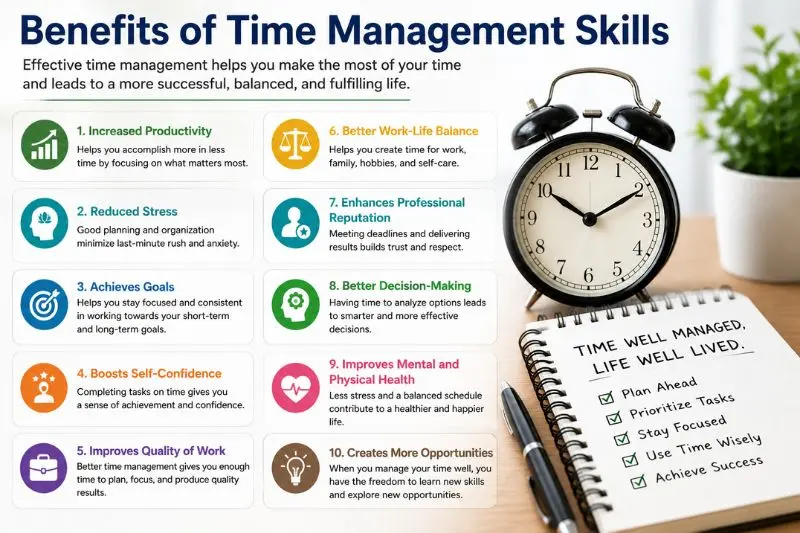
Career development offers advantages that extend beyond professional success.
Some major benefits include:
- Better career direction
- Higher job satisfaction
- Increased confidence
- Greater earning potential
- Improved employability
- Stronger leadership abilities
- Better communication skills
- Continuous learning mindset
- Enhanced productivity
- More promotion opportunities
- Increased adaptability
- Better work-life planning
- Stronger professional reputation
- Expanded professional network
- Greater long-term stability
These benefits contribute to sustainable career success and personal fulfillment.
Disadvantages and Challenges
Although career development is highly beneficial, it may also involve certain challenges.
Some common disadvantages include:
- Requires consistent effort
- Takes time to achieve results
- Continuous learning can be demanding
- Professional certifications may be expensive
- Career changes involve uncertainty
- Competition can be intense
- Balancing work and education may be difficult
- Some goals require years of preparation
Fortunately, proper planning and persistence help overcome these obstacles.
Common Mistakes to Avoid
Many professionals unintentionally slow their career growth by making avoidable mistakes.
Avoid these common errors:
Lack of clear goals
Working without direction often leads to frustration and slow progress.
Ignoring skill development
Technology changes quickly. Failing to update your skills reduces competitiveness.
Avoiding networking
Professional relationships often create valuable opportunities.
Fear of change
Remaining in your comfort zone limits career growth.
Poor time management
Without planning, learning and career development become inconsistent.
Not asking for feedback
Feedback reveals weaknesses that are difficult to identify alone.
Neglecting soft skills
Communication and teamwork are just as important as technical expertise.
Giving up too early
Career growth requires patience. Success rarely happens overnight.
What is the purpose of career development?
Career development helps individuals plan, improve, and achieve long-term professional goals while increasing satisfaction and opportunities.
When should career development begin?
It should begin as early as possible, ideally during school or college, but it is never too late to start improving your career.
Is career development only for professionals?
No. Students, graduates, freelancers, entrepreneurs, and experienced employees all benefit from career development.
How often should career goals be reviewed?
Review your goals every six to twelve months or whenever significant life or career changes occur.
Which skills are most important for career growth?
Communication, leadership, teamwork, problem-solving, adaptability, digital literacy, and continuous learning are among the most valuable skills.
Can career development increase salary?
Yes. Developing valuable skills, gaining experience, and improving performance often lead to promotions and higher-paying opportunities.
Expert Tips and Bonus Points
To maximize career growth, follow these proven recommendations:
- Read industry-related books regularly.
- Learn at least one new skill every year.
- Stay updated with market trends.
- Build meaningful professional relationships.
- Find a mentor who has experience in your field.
- Track your achievements and update your resume regularly.
- Improve communication through daily practice.
- Develop leadership even before becoming a manager.
- Stay open to constructive criticism.
- Celebrate small milestones while focusing on long-term goals.
- Maintain a healthy work-life balance to prevent burnout.
- Be proactive rather than waiting for opportunities.
Remember that consistency matters more than perfection. Small improvements made every day create remarkable career growth over time.
Conclusion
Career development is a lifelong journey that requires planning, commitment, and continuous improvement. Instead of relying on luck, successful professionals actively build their careers by setting goals, learning new skills, gaining experience, and adapting to changing industry demands. Every step you take today contributes to your future success.
Following a structured Career Development Guide helps you make informed decisions, overcome challenges, and stay focused on meaningful objectives. Whether your goal is securing your first job, earning a promotion, changing industries, or becoming a leader, investing in your professional growth opens new opportunities and strengthens your confidence.
Remember that career success is not measured only by salary or job title. True success comes from developing valuable skills, maintaining strong professional relationships, achieving personal satisfaction, and continuously learning throughout your career. Challenges will arise, but persistence and adaptability will help you move forward.
Start by evaluating your current position, identifying your strengths, setting realistic goals, and taking consistent action every day. Even small improvements can produce significant results over time. With determination, lifelong learning, and a clear vision, you can build a rewarding career that supports both your professional ambitions and personal fulfillment for many years to come.
